Guide
Nutrition on weight loss treatment
What should you eat on weight loss injections?
On weight loss injections the constraint is not willpower, it is capacity. Appetite suppression means you will eat considerably less, so what you do eat has to carry more. Prioritise protein at every meal, then fibre, then fluid. Protein protects the muscle that rapid weight loss otherwise costs you, fibre keeps digestion moving when slowed gastric emptying causes constipation, and dehydration is easy to miss when thirst signals fall alongside hunger. Most standard diet advice assumes you are fighting hunger, which makes it close to useless here.
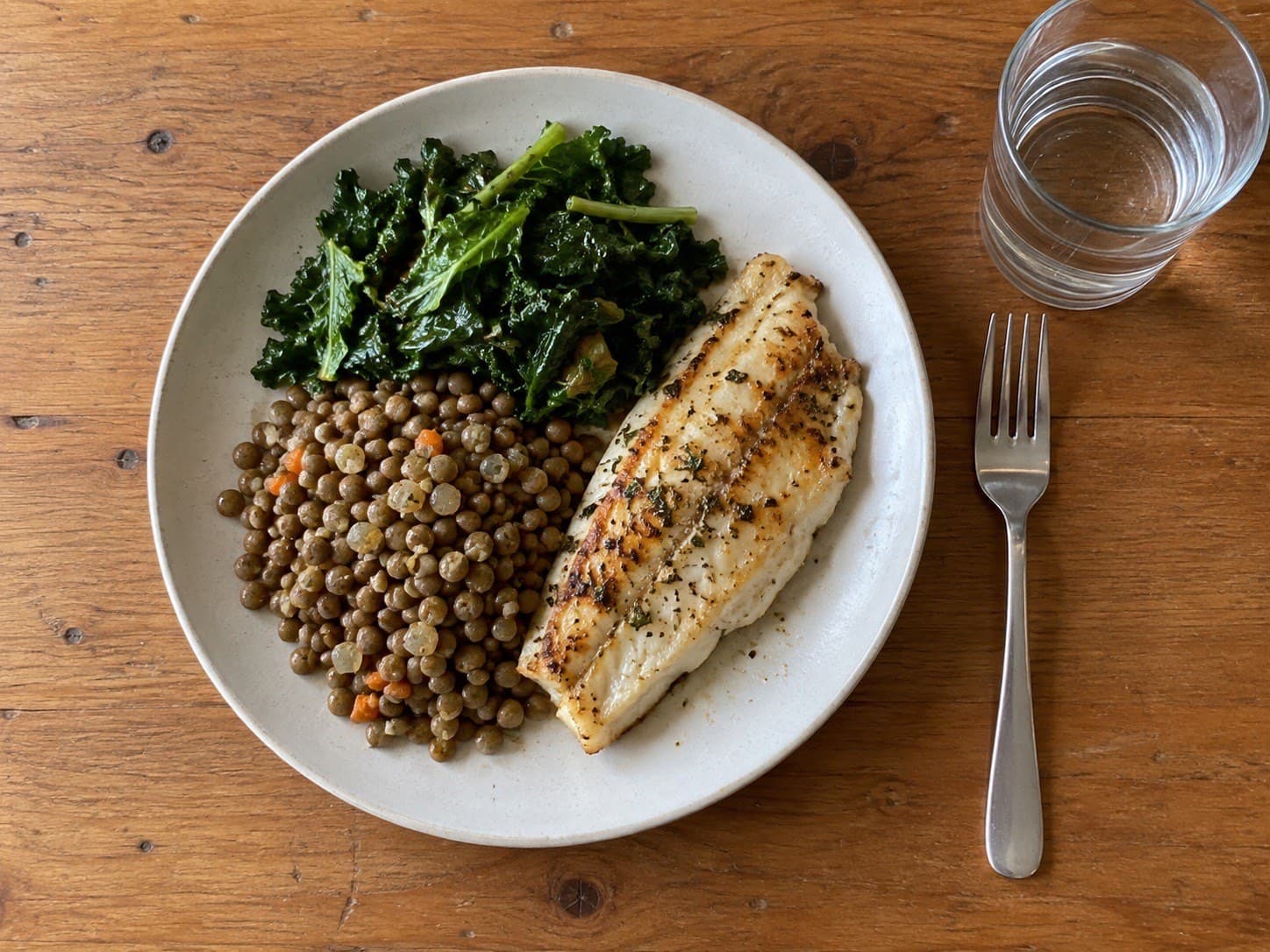
The problem is capacity, not restraint
Almost all nutrition advice is built around resisting hunger. Portion control, meal timing, filling foods, the psychology of cravings. On treatment that advice solves a problem you no longer have.
What replaces it is a capacity problem. You have fewer meals and smaller ones, so every meal has to do more work. The failure mode is not overeating, it is quietly under-eating protein and micronutrients for months while the scale moves in the right direction and the body composition moves in the wrong one.
That reframing is the whole guide. Decide what a meal must contain before you decide what it will be.
Protein first, at every meal
Rapid weight loss draws on lean tissue as well as fat. Protein is what limits that, and appetite suppression makes it unusually easy to fall short without noticing, because nothing prompts you to eat more.
The target number should come from your prescriber or a dietitian, since it depends on body weight, kidney function and other conditions. What matters more than the number is the distribution: protein is used better spread across meals than concentrated in one.
- Decide protein first
- Choose the protein, then build the plate around it. Adding protein to a meal already planned is how it ends up as a garnish.
- Front-load the day
- Appetite is often lowest in the evening on weekly treatments. Getting protein in earlier avoids running out of appetite before you have eaten enough.
- Watch the volume trap
- Salad and vegetables fill a shrunken stomach fast and displace protein. They are not the problem, but they should not go on the fork first.
- Liquid counts
- On days when solid food is unappealing, dairy, kefir or a protein drink is far better than skipping the intake entirely.
Fibre, and why constipation is so common
These medicines slow gastric emptying. That is the mechanism, not a side effect of it, and slower transit plus a much smaller food volume is a direct route to constipation.
Increase fibre gradually rather than all at once. A sudden jump in fibre on an already slowed digestive system tends to produce bloating and discomfort rather than relief.
Fluid does as much work here as fibre does. Fibre without adequate fluid makes constipation worse, not better, which is the most common mistake people make when they try to fix it.
Hydration, which is easy to miss
Thirst signals often drop alongside hunger, so the usual prompt to drink weakens at exactly the point when you need it. People routinely arrive at a review mildly dehydrated without having noticed.
Dehydration also amplifies several of the common side effects. Headache, fatigue and constipation all worsen with it, and they are frequently attributed to the medication when fluid intake is the actual cause.
Where vomiting or diarrhoea is involved, the priority changes entirely. Not being able to keep fluids down is a reason to contact your prescriber promptly rather than something to manage at home.
What tends to work in practice
These are patterns people report rather than clinical instructions, and they are worth trying if a particular week is difficult.
- Eat slowly, stop early
- Fullness arrives later than the food does. Eating past the first signal is what turns a meal into nausea an hour later.
- Smaller and more often
- Three small meals plus a protein snack is usually easier than three normal-sized meals on a reduced appetite.
- Expect the dose-increase week to be harder
- Appetite drops sharply for a few days after each increase. Plan simpler, blander food for that window rather than fighting it.
- Keep fat moderate around the injection
- Rich and fatty meals tend to sit badly when gastric emptying is at its slowest.
- Alcohol is worth reconsidering
- It worsens nausea, affects blood glucose, and displaces protein calories with none of the nutrition.
Why this matters more after treatment than during it
During treatment, appetite does the work. The habits you build are almost incidental to the weight coming off, which is precisely why they are so easy to neglect.
After treatment, appetite returns and the habits are all that is left. Someone who spent a year eating well within a suppressed appetite has a pattern to fall back on. Someone who spent a year eating whatever fitted has nothing.
That is the honest case for taking nutrition seriously while it feels least necessary. The loss phase is when it is easiest to eat well and when doing so appears to matter least.
Common questions
How much protein should I eat on weight loss injections?
The specific target should come from your prescriber or a dietitian, because it depends on your body weight, kidney function and other conditions. What is consistent across guidance is that protein needs to rise as a proportion of a smaller total intake, and that spreading it across meals works better than concentrating it in one.
What should I eat when I have no appetite at all?
Prioritise protein and fluid over everything else, and accept that the meal will be small. Dairy, kefir, eggs, soup with added protein, or a protein drink all work when solid food is unappealing. Skipping the intake entirely is the option to avoid, because that is where muscle loss accelerates.
Why am I constipated on weight loss injections?
These medicines slow gastric emptying, and slower transit combined with a much smaller food volume commonly causes constipation. Increase fibre gradually rather than suddenly, raise fluid intake alongside it, and stay physically active. Fibre without enough fluid makes it worse rather than better.
Can I drink alcohol on weight loss injections?
Discuss it with your prescriber. Alcohol can worsen nausea, affects blood glucose control, and on a substantially reduced appetite it displaces calories that would otherwise carry protein and micronutrients. The interaction is not usually dangerous, but it is rarely helpful.
Do I need supplements?
That is a question for your prescriber rather than a general recommendation. On a much lower total intake, micronutrient gaps are plausible, but which ones apply depends on what you actually eat and on any blood results. Supplementing blind is not a substitute for the conversation.
Sources
- Obesity, treatment · NHS
- Obesity: identification, assessment and management (CG189) · NICE
- Mounjaro Summary of Product Characteristics · electronic medicines compendium
Awaiting sign-off by a named clinician.
Last updated